
Muscle, Bone, Fat or Water? What’s Really Changing When Your Weight Changes
Free Body Composition Scans Included With Every 6FIT Membership, Bradford BD6

The scales lie. Not on purpose — but a number on a scale can’t tell you whether you’ve lost fat, lost muscle, or just lost water. And if you don’t know which one it is, you could be working hard in the gym and quietly making your long-term health worse.
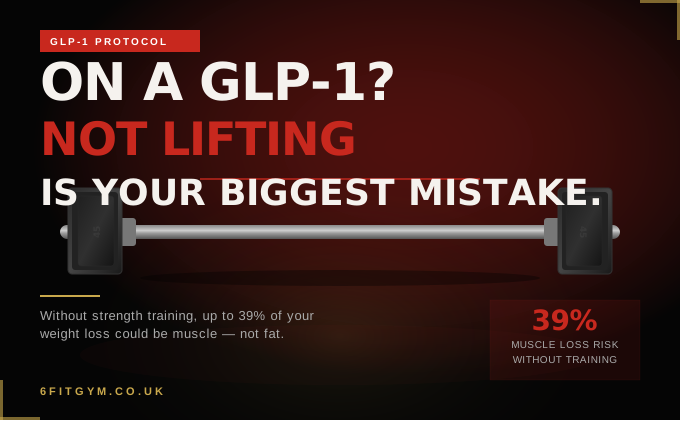
This is especially true if you’re on a GLP-1 medication (Mounjaro, Wegovy, Ozempic and similar). Rapid weight loss on these medications is well documented to come with a real risk: a large chunk of what’s lost can be muscle and bone, not just fat. That’s why understanding your body composition, not just your body weight, matters more now than ever.
At 6FIT Gyms in Bradford, every membership includes access to body composition scans using our Hume Health Body Pod — so you always know what’s actually changing underneath your clothes, not just what the bathroom scale says.
Why Weight Alone Doesn’t Tell You Anything
Two people can weigh exactly the same and be in completely different health positions. One could be carrying solid, functional muscle. The other could be carrying excess fat and losing muscle mass without realising it. The scale can’t tell the difference — it just gives you one number.
A body composition scan breaks that number down into what it’s actually made of:
- Muscle mass – the tissue that drives your metabolism, strength, and mobility as you age
- Body fat – including visceral fat, the dangerous fat stored around your organs
- Bone density/mass trends – the foundation of long-term strength and fracture risk
- Water levels – intracellular and extracellular water, which can make weight swing day to day with zero relation to fat loss or gain
Without this breakdown, you’re training blind.
Why This Matters for Long-Term Health, Not Just Looking Good
Muscle isn’t just for aesthetics. It’s one of the strongest predictors of healthy ageing there is. Low muscle mass is linked to slower metabolism, poorer blood sugar control, reduced mobility, and a higher risk of falls and fractures later in life. Bone density matters just as much — once it starts dropping, everyday movement gets harder and injury risk climbs.
This is why a scan isn’t a vanity metric. It’s a long-term health and longevity tool. Tracking muscle and bone trends over months and years lets you catch problems early and adjust your training and nutrition before they become serious issues, rather than after.
GLP-1 Medications: Why a Scan Is Essential, Not Optional
If you’re using a GLP-1 medication for weight loss, this is the single most important reason to be scanning regularly. These medications can produce fast, significant weight loss — but weight loss isn’t automatically fat loss.
Without resistance training and without monitoring, a meaningful percentage of that weight lost on GLP-1s can come from lean muscle and bone density, not fat. That’s a problem, because:
- Losing muscle slows your metabolism, making the weight harder to keep off long term
- Losing bone density increases fracture and injury risk, especially as you get older
- The scale will show “progress” the entire time, even while this is happening
A body composition scan is the only way to actually see whether your GLP-1 journey is protecting your muscle and bone, or quietly costing you both. It lets you and our team adjust your training and protein intake to make sure the weight you lose is fat, not the tissue you need to keep.
What’s Included With Your 6FIT Membership
Every member at 6FIT Gyms Bradford has access to regular body composition scans using the Hume Health Body Pod, as standard. No extra cost, no separate booking system to fight with — it’s built into being a member.
Each scan gives you a full breakdown of:
- Body fat percentage and visceral fat level
- Skeletal muscle mass, including left/right and upper/lower balance
- Bone density trends
- Total body water (intracellular and extracellular)
- Metabolic age and resting metabolic rate
We recommend scanning every 4–6 weeks to track real trends rather than day-to-day noise — and our team will talk you through your results in plain English, so you actually know what to do with the numbers.
Know What You’re Made Of
If you’ve only ever judged your progress by a number on the scale, you’ve only ever had half the picture. Whether your goal is fat loss, building muscle, protecting your bones as you age, or making sure a GLP-1 medication is working with your body rather than against it — a body composition scan is how you find out what’s really going on.
It’s already part of your 6FIT membership. Book your first scan at the gym, or speak to a member of the team on your next visit.
6FIT Gyms | Park View Mills, Wibsey Park Avenue, Bradford, BD6 3QA
Best Gym in Bradford 2025 & 2026 | Best Gym in the North, National Fitness Awards
📞 0800 342 3846 | ✉️ info@6fitgyms.co.uk | 🌐 join.6fitgyms.co.uk
6FITGyms #BradfordGym #BodyComposition #GLP1 #Mounjaro #MuscleNotJustWeight #BoneDensity #LongevityTraining #BestGymBradford #BradfordFitness
How often should I get a body composition scan?
We recommend every 4–6 weeks to see meaningful trends in muscle, fat, and bone, rather than short-term fluctuations caused by water or food intake.
Why is muscle loss a concern with GLP-1 medications like Mounjaro or Ozempic?
Rapid weight loss from GLP-1 medications can include a significant amount of muscle and bone loss alongside fat loss. Without monitoring and resistance training, this can slow your metabolism and increase long-term injury risk.
What does a body composition scan actually measure?
It measures body fat percentage, visceral fat, skeletal muscle mass, bone density trends, total body water, and metabolic age — far more detail than a standard set of bathroom scales.